Ishmael Born, Abraham and Sarah Laugh

Genesis 16-18 and Galatians 4:21-31

Abram was 75 when the journey began (Genesis 12:4). At 86, Hagar bore him Ishmael. It was common in those days for a proxy to support child-bearing in support of the larger family. Sarai did what the locals would do and Abram agreed with the plan. Together, they pitch in to “help God” with his plan to create a nation through Abram. They are doing what seems right to man, but this is not God’s plan. The story quickly gets ugly as Hagar despises Sarai and likewise Sarai is angry about the whole affair. But God comforts Hagar and promises Ishmael will become the father of many.

The story picks up 13 years later…13 years! It’s hard to imagine the interaction within this family for so much time, but here we see more than a decade passes. Now, at 99, God has a chat with Abram,

I am God Almighty; walk before me faithfully and be blameless. Then I will make my covenant between me and you and will greatly increase your numbers…your name will be Abraham, for I have made you a father of many nations.
As for Sarai your wife, you are no longer to call her Sarai; her name will be Sarah. Genesis 17:1-5, 15

Now Lord? Abraham laughs to himself and says, really Lord? The Lord hears his laughter, the question in his heart and continues to explain he will have a son with Sarah and his name will be Issac.

Three visitors meet Abraham near the great trees of Mamre: The Lord and two others (18:1). This time Sarah is the one who laughs to herself and is called out by one of the visitors.

Abraham bargains with God for the lives of the few good people in Sodom: 50, 45, 40, 30, 20 and finally 10. If there are 10 righteous people found, he would not destroy Sodom and Gomorrah.

In Galatians, Paul provides this contrast: “His son by the slave woman was born according to the flesh, but his son by the free woman was born as the result of a divine promise” (Galatians 4:23). In this sermon, Paul teaches us that we are born of freedom, not of slavery, “we are not children of the slave woman, but of the free woman.”

Reading the reference in Galatians alongside Genesis helps to understand the sermon; those who originally heard this lesson probably knew the story of Ishmael and Issac well. For us, we simply need to read by the Old and New Testament stories to gain an appreciation for what God is telling us in the Bible.

Obedience. This is all about being obedient to God, hearing his promise and living out the plan he has for our lives. It might make us laugh at times, but God hears the laughter and is not moved. Lord help me to see your plans clearly and keep me from pushing my agenda ahead of yours!
God’s Covenant with Abraham

Genesis 12-15 and Psalm 5

“…in the morning I lay my requests before you and wait expectantly. For you are not a God who is pleased with wickedness” Psalm 5:4-5

King David teaches us a lot about transparency by writing many of the psalms that reveal his frustration with those who seek to undermine God’s people. David made plenty of mistakes, but he always came back to God and entreated others to do the same. “Lead me, Lord, in your righteousness because of my enemies–make your way straight before me” (5:8). Just as we sing songs that repeat phrases as we emotionally pour ourselves out to God, David repeated asks the Lord to lead him and to wipe out the wicked; both with trust that God would do what he has promised.

And so we begin the amazing story of Abraham in Genesis 12. A story of promise, another covenant between God and a humble man. From the very beginning God’s promise is emphasized, “I will make you into a great nation, and I will bless you; I will make your name great, and you will be a blessing” (Genesis 12:2).

So Abram took his family, everything they had, and completed the trip his father begun–they went to Canaan. There was famine in the land, so they packed up and headed to Egypt where Abram’s first deception plays out, “Say you are my sister, so that I will be treated well for your sake and my life will be spared because of you.” Apparently, Sarai is quite beautiful, so Abram has a plan to take advantage of the Pharaoh’s eye for women…and it worked. Pharaoh’s men took Sarai to the palace and Abram was able to acquire cattle, servants, etc. When Pharaoh discovered Sarai was Abram’s wife he made them leave the country, but they were allowed to take all they had accumulated. So they departed.

Abram became quite wealthy and accumulated livestock with his nephew Lot, to the point that they needed to part ways to make room for the animals. Abram gave Lot the choice and Lot chose what he considered the better option in the area of Sodom. As time went on, the kings of the surrounding lands began to fight, “four kings agains five.” The band of four kings seized Lot and his possessions and took them away. The news was reported to Abram, so a rescue mission was planned with “the 318 men born in his household” (Genesis 14:14). This morning I noticed the phrase, “The 318 men…” not some random group, this is “the” group. According the NIV Study Bible notes, “the Hebrew for ‘trained men’ is found only here in the Bible.” Interesting.

Then Melchizedek king of Salem brought out bread and wine. He was priest of God Most High, and he blessed AbramGenesis 14:18

The King of Sodom tries to make a deal with Abram, but he is rebuffed harshly, “I will accept nothing by what my men have eaten and the share that belongs to the men who went with me.”

Abram is still troubled that he has no child of his own blood. The Lord hears his lament and reminds him of the promise, “He took him outside and said, ‘Look up at the sky and count the stars–if indeed you can count them…so shall your offspring be.'” The response: “Abram believed the Lord, and he credited it to him as righteousness.” As Abram struggles with understanding how all of this will happen, God makes a covenant with Abram and gives him a glimpse of the future where his descendants flourish.

In Romans 4 Paul points to this text as the basis for preaching justification by faith over works, “therefore, the promise comes by faith, so that it may be by grace and may be guaranteed to all Abraham’s offspring…He is the father of us all” (Romans 4:16). See also Galatians 3:6-14.

Lord let us be a people of faith. Help us to learn from the example Abram showed — all the honor and glory belong to you.

God’s Covenant; Tower of Babel

Genesis 9-11 and Psalm 4

The Flood is now over. Noah and his family begin their “new normal” life, so Noah plants a vineyard and gets carried away with drinking wine to excess. He falls asleep uncovered in his tent, drunk from the wine. When his son Ham sees this, he goes and tells his brothers rather than simply taking action and covering his father. Noah is irate! “Cursed be Canaan! The lowest of slaves will he be to his brothers.” Ham, the father of Canaan, becomes the clan that the Israelites will clash with over and over again including the Philistines, Hittites, Amorites, etc.

God rewards Noah by providing everything for his family. “Everything that lives and moves about will be food for you. Just as I gave you the green plants, I now give you everything” (9:3).

Covenant with Noah (Noaic Covenant)

God establishes a covenant, a two-sided agreement, with Noah:  “I establish my covenant with you: Never again will all life be destroyed by the waters of a flood; never again will there be a flood to destroy the earth” (Genesis 9:11). As a reminder, “Whenever the rainbow appears in the clouds, I will see it and remember the everlasting covenant between God and all living creatures of every kind on earth” (9:16). The rainbow now has special meaning, not just a marvel of nature to enjoy as a common event–the rainbow reaffirms the covenant. I can imagine the significance of this statement to Noah’s family, especially the first time it rained, they probably panicked! Here we go again! But the rain stopped and the rainbow was seen and they remembered. Calm down kids.

Sin still existed in the hearts of mankind. They began to grow in numbers and the corrupt human nature started to reveal itself in their hearts as they began to build the Tower of Babel. “Come let us go down and confuse their language so they will not understand each other” (Genesis 11:7). It seems this time God was not going to allow mankind to take the path prior to The Flood by intervening early. He separated the people groups by creating different languages which divided them and ultimately caused the project to fail as people couldn’t understand each other. The result: they scattered to various parts of the world.

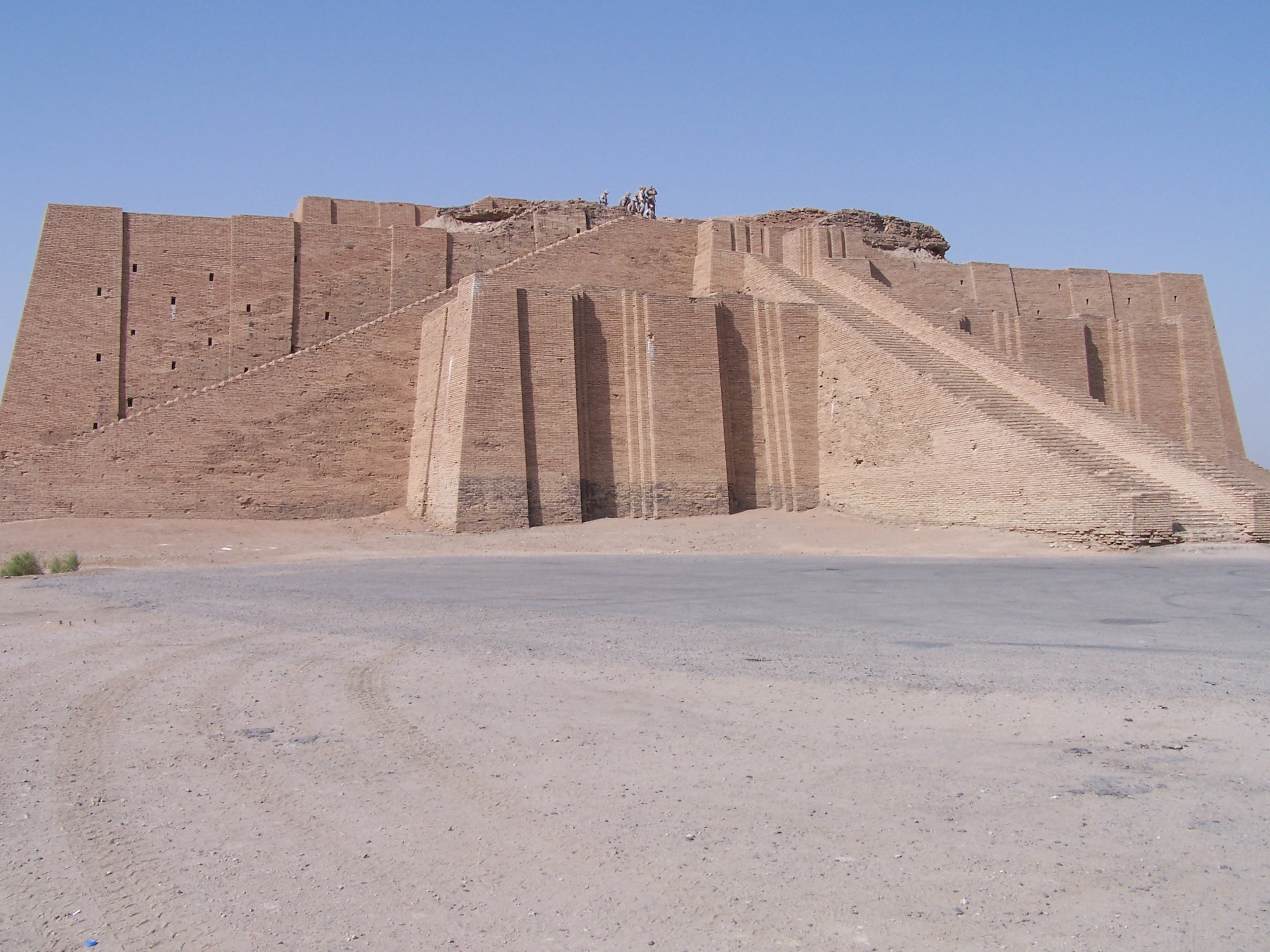
Ziggurat
Some believe that the tower of Babel was a type of ziggurat

It’s an odd explanation of how languages entered the world, but the concept of man’s pride is certainly not new. How many times does our selfish pride cause us to stumble? Ok, I’ll be real, how many times have I allowed my pride to make me stumble? Too many. Even today I have to wonder if I’m taking on way too many projects because I think I can work my way out of problems. I pray this is not the case, but I have to consider the possibility. Lord, don’t let pride overtake me! I see these stories and I don’t want to repeat past mistakes!

Interesting note: Genesis 11:10-26 traces the lineage of Abram (Abraham) back to Shem.

One of the other scriptures referenced today was Psalm 4. I would love to set this to modern language and music! It’s only eight verses.

Tremble and do not sin;
when you are on your beds, search your hearts and be silent.

Be silent. Listen for the Lord. He is there, “for you alone, Lord, make me dwell in safety.”

The Flood

Genesis 7-8 and Psalm 3

The Ark was a huge vessel, to say the least. I imagine it was the largest ever built in its day–why would anyone build such a large boat? From the images I’ve seen from those who have studied the biblical description of the Ark, it didn’t look like a sailing ship at all. Noah must have been questioned by neighbors on many levels, perhaps called crazy, insane, whatever, but he did what God said for a purpose beyond explanation.

One day I hope to make it to The Ark Encounter. I think it will be great fun to get a sense of the scale and magnitude of the Ark and support a Christian brother’s business. This will be a great trip, but much like visiting the Holocaust Museum, I’m quickly reminded of the somber atmosphere that surrounds the oft-portrayed children’s story of Noah and The Flood. The waters flooded the earth for 150 days. Even if someone built a raft and hung in there for the beginning of the flood, or perhaps in their own boats, they wouldn’t have had 150+ days of provisions. No. Mankind was wiped out. Pause.

Seven pairs of birds and clean animals, one pair of unclean. God included specific details for Noah; thus, he has enough animals to offer a sacrifice when the flood was over.

The long journey of building the Ark, collecting animals and birds is done on the 27th day of the second month of Noah’s 601st birthday, about a year after the rain began, The Flood was now over. Noah’s first action is to offer a pleasing sacrifice to God. The sense I get from reading that last verses in chapter 8 is one of great respect and appreciation to God for saving Noah and his family.

It’s interesting to read, “God said in his heart…” Here Moses is giving us some insight he has gained by communing with God himself. Honestly, I can’t wrap my mind around the thought, but the thought of God being introspective is astounding and incredibly humbling.

As long as the earth endures,
seedtime and harvest,
cold and heat,
summer and winter,
day and night
will never cease.Genesis 8:22

There are many stories of how The Flood happened, many plausible scientific explanations have been offered to explain how. There’s no denying that something happened in ancient times to change the course of history. My prayer is that we learn to understand that God is the master architect behind it all. I hope we can learn this truth deep inside so that the light shines clearly from within to those who are far from Christ. Lord help me to be patiently filled with love for your people and especially those who don’t know you or who have turned their backs on you. May your light shine into their hearts.

Sin Spreads Worldwide

Genesis 5-6

Chapter 5 describes the long lifespans of mankind before The Flood. Some would argue they had a different definition of years in those days, but the theme I get is man lived, multiplied and died…except for Enoch. Enoch walked faithfully with God; then he was no more, because God took him away (Genesis 5:24). He must have been a model follower of all God had envisioned. “By faith Enoch was taken from this life, so that he did not experience death…he was commended as one who pleased God” (Hebrews 11:5).

What is really meant by “Sons of God” and “Daughters of Humans” and who were “The Nephilim” mentioned in Genesis 6:4?

These are hard topics to discuss because we lack details and as a result the “experts” provide all kinds of interesting insight. Those who are far from Christ will use these types of references in an attempt to destroy our credibility. Many of those who have been raised in the church don’t even know how to approach the subject because they weren’t taught much (back to the “lack of details” concept).

If we are to be the light and salt in this every postmodern world, we must not simply skip verses we don’t understand. At the same time, it doesn’t make sense to overemphasize concepts that aren’t well substantiated. All that to say, in my perspective, we should step back and look at what God is telling us in Genesis 5 through most of chapter 11 — this is the core theme: mankind (that which God created, Genesis 5:1-2) had become corrupt and required a restart. I’ll continue to pray for insight into the sons and daughters and Nephilim, but I cannot ignore that there is evil in this world, that there are those bent on selfish desires of their fleeting flesh. So there, I just skipped verses I don’t understand, but at least with the caveat that I don’t fully understand them either. I hope I’m not a stumbling block for someone reaching out to Christ as a result.

We will soon see the full fury of God’s wrath in the next few chapters. This prelude gives us a glimpse of creation in chaos. Such disorder is not acceptable to God and he will put an end to those who have taken sin to an extreme.

Noah is given a job to do because of his reputation, his faithfulness. The weight of this responsibility is beyond my comprehension. God provides detailed instructions to preserve life as the world gets a jump start. We teach this in kids Bibles and VBS all the time, but honestly, it’s one of the saddest stories in the Bible. It truly breaks my heart to think about the masses of humanity that died as a result of depravity. I’m not questioning God here, just extremely sad.

God help us to pull people out of darkness and into your great and glorious light!

Sin Spreads to Family

Genesis 4, Psalm 2

The lesson from Cain and Abel is still very much alive today. Even within my own family I see examples of how one brings an offering with truly good intents while another has ulterior motives. Thankfully, at least to date, the worst of the motives are petty in nature, nothing like Cain!

Sadly though, reading the local newspaper reveals the darkest of hearts still exists in our local communities. So sad, especially in these small, rural communities. Given the number of people in large metro areas, you would expect to find stories of violent domestic disturbances, just because the statistics favor large numbers, but here?

We need to be aware of the struggles that people are dealing with on the inside. This is only possible when we build relationships, something that takes time and only happens when we truly care about our neighbors.

In many ways I think we’ve lost the art of making friends. Facebook teaches us that you click to add friends and while we all know that’s not reality is subtly creeps into our subconscious thoughts. Dale Carnegie’s famous, How to Win Friends and Influence People, was a book based on biblical principles written to an audience that was generally interested in learning how to apply these concepts. I’m not a big fan of wikipedia, but take a glance: https://en.wikipedia.org/wiki/How_to_Win_Friends_and_Influence_People. Don’t misunderstand me, we don’t “handle” people or in any way, shape or form try to manipulate them to our way of thinking, but if we are students of Jesus Christ, we will see the 20th century principles Carnegie was trying to convey.

If we are not thinking like Christians, these same principles can be used to manipulate others as well. Why? Because we are social beings. God intended for us to be a community, to be in community with one another.

The narrative in Genesis 4 doesn’t explain why Cain’s offering wasn’t acceptable, at least not directly. When we read the rest of the story, especially Genesis 4:7, we see that there is something going on beyond the simple offering of grain, the fruit of the land.

“…But if you do not do what is right, sin is crouching at your door; it desires to have you, but you must rule over it.”

Abel offers the best from the flock and apparently Cain picked up what was simple and common. God provided an opportunity for Cain to learn, knowing what would happen next.  Hebrews 11:4 stresses that faith was the key to Abel’s offering, his intent was righteous.

Lord, sharpen my senses to see that my own intentions are righteous, are a worthy offering to you. Teach me to learn your ways, each day. Help me to show others the strength in community, even though it requires time and energy.

God’s Breath of Life and the Fall of Humanity

Genesis 2-3, 1 John 4:7-8, 12

Community. God wants us to live in community, to love one another as he first loved us. The picture of the Garden of Eden is one of perfection that was marred by temptation, by listening to the voice of the great deceiver. God’s plan was for man and woman to live together in harmony. When sin entered into the equation, the plan changed.

Satan enters the story in Genesis 3, early in the account of creation, setting the stage forever. The great deceiver begins by luring Eve into a conversation, “Did God really say…” Eve’s response is interesting because it seems that she adds a provision we don’t see in Genesis 2:16-17, “…you must not touch it…” Of course, God could have given them a list of rules and we only see the summary in 16-17, but here’s the reality: Eve and Satan are having a conversation, worse: Eve is listening to the serpent. That cannot end well.

Adam is complicit as well. Eve offers him the fruit and he eats it even though he knows the simple command that God provided. Peer pressure to the extreme, perhaps, but Adam knew (“who was with her”) and he disobeyed, “and he ate it.”

At this moment God could have simply cleaned the slate and started over, but that was not his reaction. Mankind is forever changed, but with a desire for restoration, not termination.

“And I will put enmity between you and the woman and between your offspring and hers; he will crush your head, and you will strike his heel.”

The word enmity is not something I hear in conversation, so I looked it up: Webster’s provides this simple definition: “a very deep unfriendly feeling.” Dictionary.com is stronger, “a feeling or condition of hostility; hatred; ill will; animosity; antagonism” and Google shows, “the state or feeling of being actively opposed or hostile to someone or something.” It looks like Webster is trying not to offend people (seriously!). When I insert one of these definitions into the verse, it helps me understand a bit more:

And I will put [the state of being actively opposed] between [Satan] and [women]…

Ultimately woman will give birth to Jesus who will crush Satan forever and erase this curse as Paul describes at the end of Romans (Romans 16:20), “The God of peace will soon crush Satan under your feet.”

There is a lot to consider with these few verses. The introduction of sin into our world is a heavy subject, one that is hard to discuss with those who have been raised without God in their lives. We need to wrestle with this concept because as we begin to understand how sin entered the world we will see how the Bible provides the narrative to tell the story of God’s relentless desire to restore our relationship. This gives us the knowledge to explain how Christ came to relinquish sin (pain and suffering) and restore God’s creation. As we grow in this knowledge we prepare ourselves to give an answer to everyone who asks us for the reason we have hope (1 Peter 3:15) — the hope of the world — Jesus Christ.

WordPress Child Themes

Child Themes are still the best way to customize WordPress based on an excellent theme like http://vpthemes.com/portfolio/terrifico/. By using a child theme, you can personalize your theme without affecting the parent theme and, most importantly, when the parent theme is updated, you don’t have to worry about losing your custom code. Of course you’ll need to make sure to check the Changelog to ensure nothing drastic has been modified.

Here’s the process of incorporating a child theme:

1. Create a unique folder in your wp-content/themes folder. For example, I created a folder named hgctools_terrifico

2. Create a style.css file in that folder with the template below, using your details of course:

/* 
 Theme Name: HGCTools as Child Theme of Terrifico
 Theme URI: http://HGCTools.com
 Description: Healthy Growing Churches -- Tools -- WordPress Theme based on http://vpthemes.com/portfolio/terrifico/
 Author: Dave Phillips
 Author URI: http://teracomp.net
 Template: terrificopro
 Version: 1.0
 */

NOTE: the Template I’m using is the “pro” version; Template: terrificopro. If you’re using the free version, make this line Template: terrifico

3. Create a functions.php file and include this code at the very beginning:

<?php
function terrificopro_child_enqueue_styles() {
    // This is 'terrificopro-style' for the terrifico Pro theme. 
    $parent_style = 'parent-style';

    wp_enqueue_style( $parent_style, 
        get_template_directory_uri() . '/style.css' );
   
    wp_enqueue_style( 'child-style',
        get_stylesheet_directory_uri() . '/style.css',
        array( $parent_style ),
        wp_get_theme()->get('Version')
    );
}
add_action( 'wp_enqueue_scripts', 'terrificopro_child_enqueue_styles' );
?>

4. Activate your new theme in your WordPress admin panel.

Now you can safely update your style.css and functions.php files to make your site your own.

God’s Good Creation

Genesis 1 and Psalm 1

From the beginning God’s essence includes the Holy Spirit, the Spirit of God. In verse 26, the triune nature of God is presented as he created mankind, male and female in his image, “let us make mankind…”

If God is invisible, what do you think “created in the image of God” means? This is actually the first time I thought about the question. I’ve never really thought about God being invisible and creating visible beings. But perhaps we shouldn’t be so quick to assume that this creative moment is meant to be bound by human flesh. We know the mortal body will eventually return to dust. What is left of that which God created then?

We are not mere mortals, as C.S. Lewis reminds us. If we believe each of us embodies a life of eternity, we must treat each other with great love, compassion and respect. Since we are created with the DNA of God, we have the opportunity to be the light of the world, one candle at a time. If we would simply trust that God will ultimately handle those who are wicked, just let go of self-righteous thoughts and focus on reaching those who are far from Christ, we would advance God’s kingdom here on earth beyond our wildest imagination.

The creation story doesn’t satisfy scientists, but I’m pretty confident that was never its purpose. The story assures us that God put things in motion, in order, by his hand. Psalm 1 reminds us that he will stay in control.

And He Chose You

Today’s Our Daily Bread referenced Deuteronomy 10:12-22 which includes the phrase, “and He chose you, their descendants, above all the nations.” In reading the Bible, the concept of the “chosen people” is a consistent theme. Many times we read about the people chosen by God, but today the thought that jumped out is this:

they weren’t chosen because they were special,
they were blessed because they were chosen.

Let that sink in for a minute.

We are blessed because we have been saved by Grace, set apart, listed among the few. This special favor is not something to wear with pride as the Pharisees did–thus a significant part of Jesus’ earthly ministry. This whole concept of being “special” is fragmenting this country as it seems like a new people-group pops up daily and demands to have special treatment.

The reality is we are set apart to do the work of Christ during the short time we have on earth. God chose Israel to be the example for the world and they messed it up over and over again. For our benefit, God chose to record this in great detail in the Old Testament.

12 And now, Israel, what does the Lord your God ask of you but to fear the Lord your God, to walk in obedience to him, to love him, to serve the Lord your God with all your heart and with all your soul, 13and to observe the Lord’s commands and decrees that I am giving you today for your own good?

For Your Own Good

What a concept. It’s all about pointing to the Lord. Holy Spirit help me to point to you in all things. Keep me humble while you give me strength to lead, follow, serve, teach, learn and live for Christ in all that I do.